
Shin Splints (Medial Tibial Stress Syndrome) Treatment in Whitby
Shin splints—medically known as Medial Tibial Stress Syndrome (MTSS) cause pain along the inner border of the shin bone during walking, running, or high‑impact activity. MTSS is now understood as an overuse bone‑stress injury, not simply inflammation, and sits on the same continuum as stress reactions and stress fractures. Early recognition and proper load management prevent progression. We assess and treat shin splints at our Whitby clinic to reduce tibial stress, improve mechanics, and help you return to activity safely.
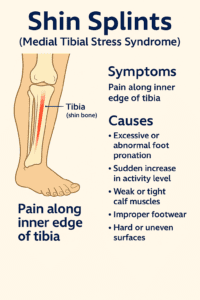
Why Shin Splints Happen
Foot Instability & Excessive Pronation
When the arch collapses or the foot rolls inward excessively, the muscles supporting the arch must work harder. This increases traction and bending forces on the tibia. Excessive or uncontrolled pronation under load is a major mechanical risk factor, especially in people with flat or flexible feet, collapsing arches, or poor shock absorption in footwear.
Sudden Increases in Activity
Most cases begin after a training spike such as starting a new running program, returning after time off, adding hills or sprints, or increasing walking or standing at work.
Muscle Weakness or Tightness
Weak calves, weak tibialis posterior, weak hips and core, or tight gastrocnemius/soleus muscles reduce shock absorption and increase tibial loading.
Bone Stress & Reduced Tissue Capacity
The tibia remodels in response to load. When load increases too quickly, the bone cannot keep up—leading to MTSS or, if ignored, a stress fracture.
How We Assess Shin Splints
Assessment includes:
-
Foot posture and arch stability
-
Gait mechanics
-
Calf flexibility and strength
-
Hip and core control
-
Footwear assessment
-
Training history
Imaging is only needed if a stress fracture is suspected.
Treatment Options
Load Management (Most Important)
Temporarily reduce running volume, avoid hills and hard surfaces, switch to cycling or pool running, and reintroduce running gradually. This is the strongest evidence‑based intervention.
Custom Orthotics (When Foot Instability Is Present)
Orthotics help reduce tibial loading and control excessive pronation in patients with collapsing arches, fatigue‑related pronation, recurrent shin splints, or those who fail standard rehab.
Footwear Optimization
Replace worn shoes, choose footwear matched to your foot type, consider shock‑absorbing insoles, and avoid overly stiff or overly soft shoes. Footwear plays a major role in tibial loading.
Manual Therapy & Soft Tissue Treatment
Calf and tibialis posterior release, myofascial therapy, joint mobilization, and instrument‑assisted soft tissue techniques reduce tension on the tibia and improve movement efficiency.
Strengthening & Conditioning
A targeted program builds resilience through calf strengthening, tibialis posterior activation, foot intrinsic strengthening, hip and core stability, and flexibility where needed. This reduces recurrence dramatically.
Low‑Level Laser Therapy (LLLT)
LLLT uses targeted light energy to stimulate tissue repair and reduce pain. Evidence suggests it can accelerate healing in MTSS.
Shockwave Therapy (For Persistent Cases)
Shockwave therapy shows promising results in chronic MTSS and can accelerate healing when standard care isn’t enough.
Recovery Timeline
Most patients improve within 4–8 weeks with proper management. Chronic or recurrent cases may take longer.
Prevention
-
Increase training gradually
-
Strengthen calves, hips, and feet
-
Replace worn footwear
-
Use orthotics if you have foot instability
-
Avoid sudden changes in terrain or intensity
When to Seek Help
You should be evaluated if:
-
Pain persists despite rest
-
Pain becomes sharp or localized
-
You suspect a stress fracture
-
Symptoms keep returning
-
You want to continue training safely
Shin Splints Treatment in Whitby
We assess foot mechanics, footwear, and tibial loading to determine why your shin pain developed and how to resolve it. Treatment focuses on reducing bone stress, improving biomechanics, and restoring comfortable movement.
Book an Appointment
Book an appointment If you’re struggling with shin pain, early treatment prevents progression to more serious bone‑stress injuries.