
Posterior Heel Pain in Children: Calcaneal Apophysitis (Sever’s Disease) Treatment in Whitby
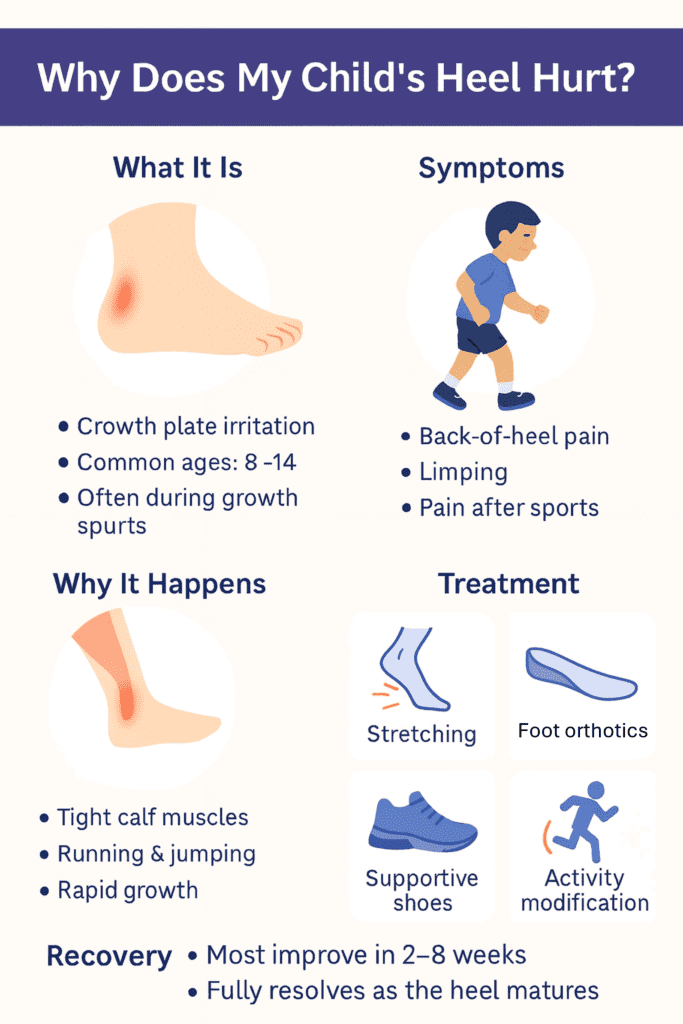
We provide assessment and treatment for posterior heel pain in children at our Whitby clinic. The most common cause is calcaneal apophysitis (Sever’s disease)—a temporary irritation of the heel’s growth plate seen in active children ages 8–14. With proper care, children recover fully and return to sports safely..
What Is Calcaneal Apophysitis?
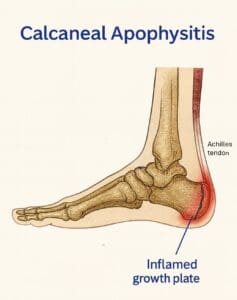
Calcaneal apophysitis is an overuse injury affecting the heel’s growth plate. The area is softer during childhood and becomes irritated when the Achilles tendon repeatedly pulls on it during running and jumping. Growth spurts increase the risk because bones lengthen faster than muscles can adapt.
Who Is Most Affected?
Calcaneal apophysitis is most often seen in:
- Boys aged 9–14, with a peak around 10–12
- Children who play sports such as soccer, basketball, football, gymnastics, or running
- Kids with tight calf muscles or limited ankle flexibility
- Children with flat feet, high arches, or altered foot posture
- Those experiencing rapid growth spurts
Common Symptoms
Parents often notice:
- Pain at the back or sides of the heel, especially after activity
- Limping or walking on toes to avoid heel pressure
- Pain when the heel is squeezed from both sides
- Discomfort during running, jumping, or tiptoe walking
- Occasional mild swelling or warmth
Symptoms usually develop gradually rather than after a single injury.
Why Does It Happen?
The heel bone has a growth plate that remains open until about age 14–15. Before it hardens, it is more sensitive to repetitive stress. Tight calf muscles, increased sports participation, and rapid growth all increase tension on the heel.
Recent research has revealed:
- Limited ankle dorsiflexion is a major risk factor
- High-impact sports increase plantar pressures
- Foot posture influences symptom severity
How Is It assessed?
Assessment is based on:
- A detailed history
- Physical examination
- Pain with heel squeeze testing
- Gait assessment
X‑rays are rarely needed unless another condition is suspected.
Evidence‑Based Treatment Options
Podiatric research over the past five years consistently supports conservative, non‑invasive treatment. Most children improve within 2–8 weeks.
1. Activity Modification
Reducing, but not eliminating, impact activities helps calm the irritated growth plate.
- Temporarily reduce running and jumping
- Switch to low‑impact activities (cycling, swimming)
- Gradual return to sport once pain improves
Recent studies show load management is one of the most effective first‑line treatments.
2. Stretching Program
Calf and Achilles stretching is the most evidence‑supported intervention.
- Daily gastrocnemius and soleus stretches
- Improves ankle mobility
- Reduces traction on the heel
Multiple Random Control Trials (2020–2024) show stretching significantly reduces pain and improves function.
3. Heel Cups, Heel Lifts & Orthotics
These reduce stress on the heel and Achilles tendon.
-
Heel cups provide immediate cushioning
-
Heel lifts reduce Achilles tension
- Prefabricated or custom orthotics help when foot posture contributes to stress on the growth plate
4. Footwear Optimization
Supportive footwear is essential.
Recommended features:
- Slight heel elevation
- Firm heel counter
- Shock‑absorbing midsole
Avoid flat, unsupportive shoes such as minimalist runners or worn‑out cleats.
5. Ice & Short‑Term Anti‑Inflammatory Strategies
Used for symptom relief:
- Ice after activity
- Short‑term NSAIDs only if recommended by a healthcare provider
6. Strengthening Program
Once pain decreases, strengthening helps prevent recurrence.
- Calf strengthening
- Foot intrinsic muscle exercises
- Hip and glute strengthening for better lower‑limb mechanics
Emerging evidence supports strengthening for long‑term outcomes.
7. Short‑Term Immobilization
Used only when pain is severe or persistent.
- Walking boot for 1–3 weeks
- Rarely, a short cast
Prognosis
Calcaneal apophysitis is self‑limiting and resolves once the growth plate closes. Most children recover within 2–8 weeks with proper care.
When Should You Seek Care?
Book an assessment if your child:
- Has heel pain lasting more than 1–2 weeks
- Is limping or avoiding activity
- Has pain in both heels
- Experiences swelling or pain after a specific injury
- Has symptoms interfering with sports or daily life
Pediatric Heel Pain Treatment in Whitby
We provide:
-
Child‑friendly assessment
-
Gait and footwear evaluation
-
Customized stretching and strengthening plans
-
Orthotic solutions when needed
-
Guidance for safe return to sport