
Preventing Toenail Fungus & Stopping Reinfection in Whitby
Toenail fungus is stubborn, slow‑growing, and easy to pick up again if the environment is right. Whether you’re trying to avoid your first infection or prevent it from returning after treatment, these simple steps can make a major difference. This guide brings together practical, clinically informed strategies to help you keep your nails clear and healthy.
Why Prevention Matters
Fungal spores are everywhere — in shoes, on floors, in showers, and even in socks. Once they enter the nail, they can be difficult to eliminate. Prevention helps you:
- Reduce the chance of a new infection
- Stop reinfection after treatment
- Protect family members
- Maintain healthy, comfortable nails
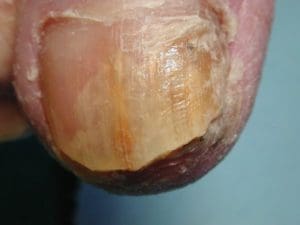
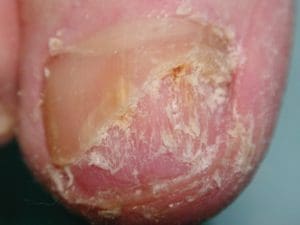
Early treatment is especially important. Once fungus affects 50–75% of the nail, it becomes significantly harder to clear.
Learn more about treatment options for fungal toenails.
It is very difficult to get rid of a fungal nail infection, especially if the fungus infects more than 75% of the nail bed and nail plate. The early treatment of a fungal nail infection before it gets to the 50-75 % stage is paramount to have a chance of clearing the fungal toenail infection.
How to Prevent Toenail Fungus
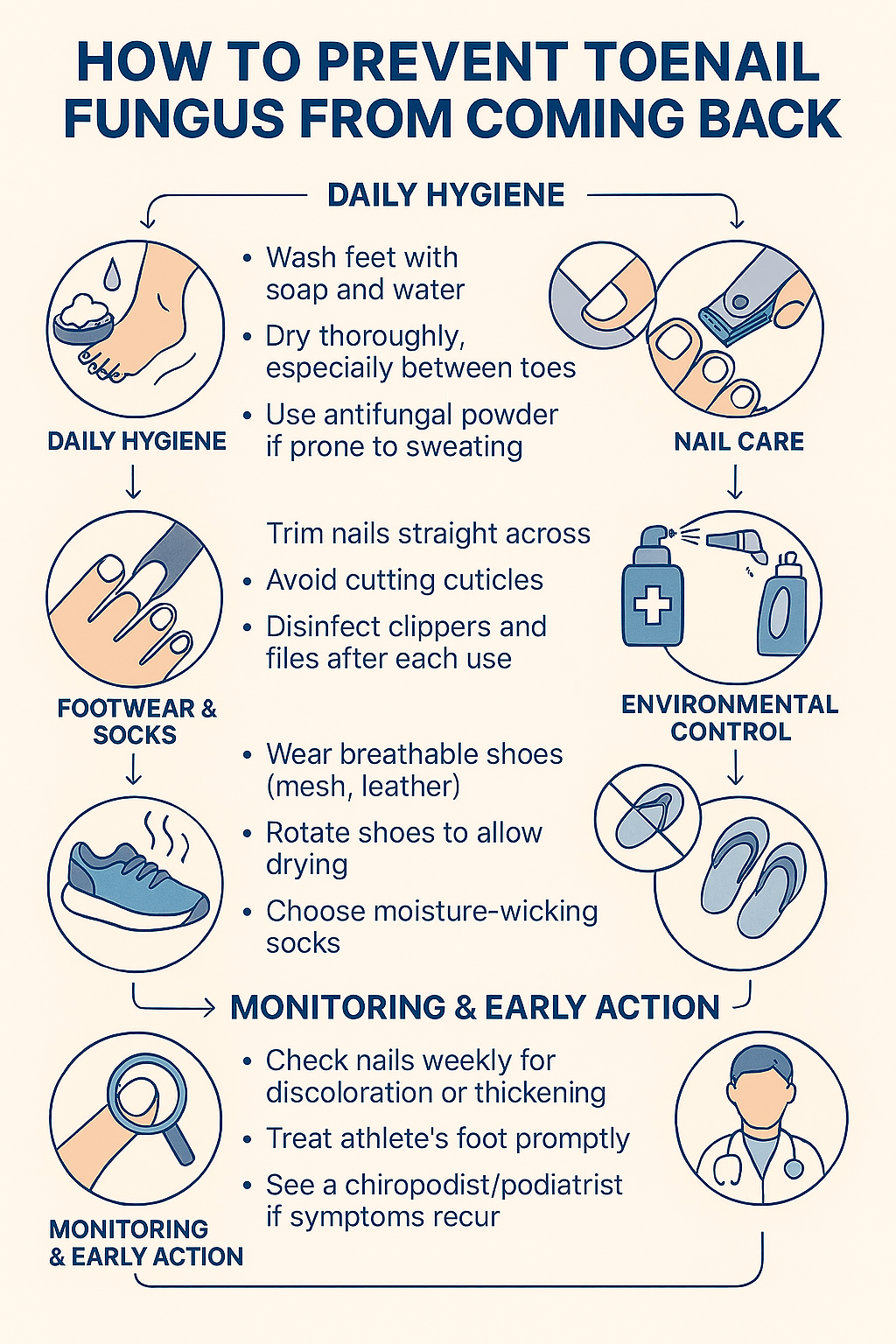
1. Keep Your Feet Clean and Dry
Fungus thrives in warm, moist environments.
- Wash your feet daily with soap and water
- Dry carefully, especially between the toes
- Use antifungal powder if your feet sweat easily
- Change socks if they become damp during the day
2. Choose the Right Footwear
Your shoes play a huge role in fungal growth.
- Wear breathable shoes (mesh or leather)
- Rotate shoes daily so they can dry out
- Avoid tight footwear that causes pressure or sweating
- Choose moisture‑wicking socks (synthetic blends or merino wool)
If shoes are old, worn, or smell musty, they may be holding fungal spores — replacing them can help.
3. Protect Your Feet in Public Spaces
Fungus spreads easily in shared environments.
- Wear flip‑flops in public showers, pools, and locker rooms
- Avoid walking barefoot in gyms or hotel bathrooms
- Keep bathroom floors at home clean and dry
4. Keep Your Nail Care Tools Clean
Fungal spores can live on tools and spread from nail to nail.
- Trim nails straight across
- Avoid cutting cuticles (they protect the nail)
- Disinfect clippers and files after each use
- Don’t share nail tools with others
How to Prevent Reinfection After Treatment
If you’ve already had toenail fungus, these steps are essential to keep it from coming back.
1. Treat Athlete’s Foot Promptly
Athlete’s foot and fungal nails often go hand‑in‑hand.
- Use a topical antifungal cream once or twice a week
- Apply to the tops and bottoms of the feet, between toes, and over the nails
- Prescription creams (like Loprox) may be recommended
If the skin between your toes smells strong or looks irritated, it may be bacterial — a chiropodist/podiatrist can confirm.
2. Disinfect Socks, Bedding, and Towels
Fungal spores can survive on fabrics.
- Wash socks and bedding with bleach or disinfectant
- Replace old socks that hold moisture
- Avoid re‑wearing socks without washing
3. Clean and Disinfect Shoes
Shoes are one of the most common sources of reinfection.
- Spray the inside of shoes with antifungal spray
- Consider an ultraviolet shoe sterilizer for deeper cleaning
- Let shoes dry completely between uses
4. Treat All Affected Family Members
If someone else in your home has athlete’s foot or fungal nails, you can keep getting re‑infected. Treating everyone at the same time reduces the risk dramatically.
5. Monitor Your Nails Regularly
Catching changes early makes treatment easier.
- Look for new discoloration, thickening, or lifting
- Keep nails trimmed and clean
- Book a visit if anything looks suspicious
When to See a Chiropodist
Professional care is recommended if you notice:
- Thick, yellow, or crumbly nails
- Pain when wearing shoes
- A nail lifting from the nail bed
- Recurring athlete’s foot
- A fungal infection that isn’t improving
We can assess your nails, confirm whether it’s fungal or bacterial, and recommend the best treatment plan.
If you’re unsure whether your nail changes are fungal, book an assessment.