
Diabetic Footcare in Whitby: Prevention, Monitoring & Treatment
Diabetes can lead to serious foot complications—including ulcers, infections, and amputations—but most of these outcomes are preventable with proper care. At Whitby Family Footcare Clinic, we provide diabetic foot assessments, education, and treatment strategies to help protect your feet and reduce long‑term risks.
Why Diabetic Footcare Matters
-
1 in 5 Canadians with a diabetic foot ulcer will require amputation
-
Up to 65% of ulcers recur within 3–5 years
-
Hospitalization rates remain high, even though major amputations have declined
-
Ontario has over 1.3 million people with diabetes, and foot complications cost the healthcare system millions annually
Early intervention and regular footcare can dramatically reduce these risks.
Common Risk Factors for Diabetic Foot Problems
-
Poor blood sugar control
-
Reduced circulation
-
Nerve damage (neuropathy)
-
Foot deformities or pressure points
-
Improper footwear
-
Lack of regular foot exams
What We Assess During a Diabetic Foot Exam
-
Skin integrity and signs of irritation
-
Circulation and temperature changes
-
Sensory loss (monofilament and vibration testing)
-
Nail health and pressure areas
-
Footwear fit and friction points
-
History of ulcers, wounds, or infections
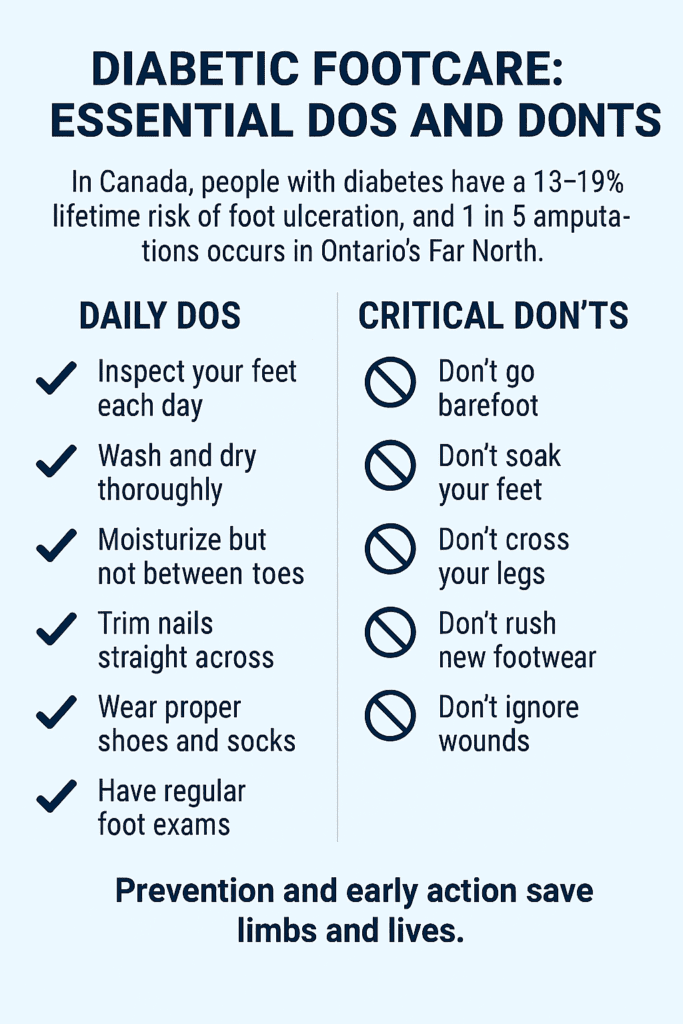
Diabetic Footcare: What to Avoid
-
Never go barefoot, indoors or outdoors—even minor injuries can lead to serious infections
-
Avoid soaking your feet regularly, which can dry the skin and cause cracks
-
Don’t cross your legs when sitting, as this reduces blood flow
-
Don’t break in new shoes all at once—increase wear time gradually
-
Don’t ignore foot problems—early treatment prevents complications
Why Location Matters in Canada
Access to diabetic footcare varies across provinces and territories. In some regions, the risk of serious complications is three times higher due to limited prevention programs and specialist access. In Ontario, many patients still lack timely care—despite high prevalence and healthcare costs.
Diabetic Footcare in Whitby
We help patients with diabetes protect their feet through:
-
Comprehensive foot exams
-
Nail and skin care
-
Pressure relief strategies
-
Footwear guidance
-
Education on daily monitoring
-
Early intervention for wounds or irritation
Book an Appointment
If you have diabetes, regular foot assessments can prevent serious complications.