
Ingrown Toenails in Whitby: Causes, Symptoms & Treatment Options
We provide safe, effective ingrown toenail treatment in Whitby, offering immediate relief for both non‑infected and infected cases. Whether the pain is mild or severe, our chiropodists use gentle, evidence‑based techniques to resolve the problem quickly and prevent recurrence.
What Is an Ingrown Toenail?
An ingrown toenail occurs when the edge or corner of the nail grows into the surrounding skin. This leads to pain, redness, swelling, and sometimes infection. Ingrown toenails can affect children, teens, adults, and seniors, and often make it difficult to wear shoes or even tolerate the pressure of bedsheets.
Types of Ingrown Toenails
Non‑Infected Ingrown Toenail
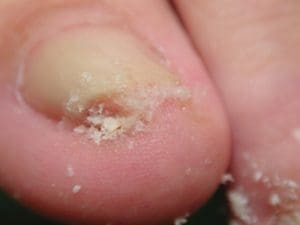
This is the most common type. It happens when the toenail is naturally curved and begins to dig into the skin along the nail border.
Typical symptoms include:
- A sharp, knife‑like pain along the toenail edge
- Redness and irritation
- A callus or corn forming in the nail skin groove
- Pain from even light pressure — socks, shoes, or bedsheets
What NOT to do
Avoid digging at the nail or trying to cut it yourself. This often makes the problem worse and can easily lead to infection.
How we treat it
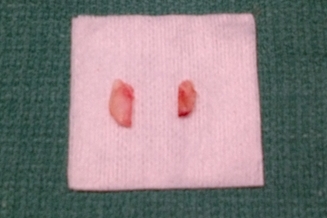
Treatment is simple and highly effective. We gently remove a small sliver of toenail from the affected border, relieving pressure immediately. Most patients walk out feeling significantly better and are pain‑free within 1–2 days.
Infected Ingrown Toenail
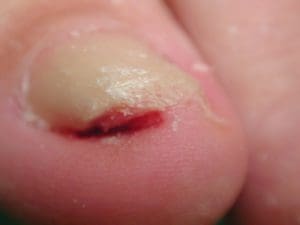
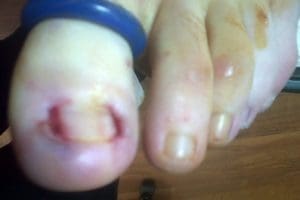
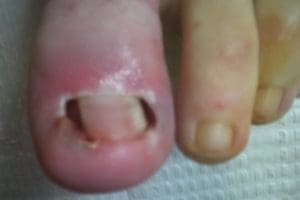
An infected ingrown toenail usually develops when the nail pierces the skin and continues to grow inward. This is often caused by improper nail cutting, trauma, or a naturally curved toenail.
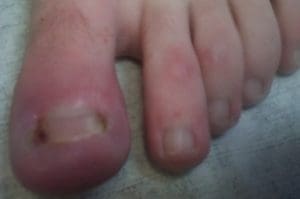
Signs of infection include:
- Increased pain
- Redness and swelling
- Warmth
- Drainage or pus
Treatment: Surgical Nail Decompression
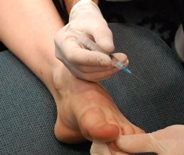
For infected cases, a minor procedure is required:
- The toe is numbed for comfort
- A thin portion of the toenail is removed down to the root
- A medical chemical is applied to prevent that section of toenail from growing back
- An antibiotic may be prescribed if the infection is significant
This procedure prevents the ingrown toenail portion from returning and provides long‑term relief.
When to Seek Treatment
You should book an appointment if:
- Your toe hurts inside your shoe
- The pressure of bedsheets causes pain
- You notice redness, swelling, or drainage
- You’ve been dealing with the problem for weeks or months
- Home care hasn’t helped
Delaying treatment often leads to infection and more discomfort — early care is always easier and less invasive.
Professional Ingrown Toenail Treatment in Whitby
Our foot specialists provide safe, effective treatment for both non‑infected and infected ingrown toenails. Whether you’re experiencing mild irritation or severe pain, we can help you get back to walking comfortably again. Book your appointment to relieve your pain.
Book an Appointment
If you’re dealing with persistent toe pain, our clinic offers trusted ingrown toenail treatment in Whitby with fast relief and long‑term results.