
What Makes a Foot Orthotic Custom? A Patient Guide
Custom foot orthotics are prescription medical devices designed to stabilize the foot, control motion, and improve alignment with the lower leg. They are built from a detailed assessment of your symptoms, medical history, biomechanics, and gait pattern—not from a generic template. True custom orthotics help you stand, walk, and run more efficiently by matching the exact contours and functional needs of your feet.
What Makes an Orthotic Truly Custom?
A genuine custom orthotic is created from a 3‑dimensional model of your foot, taken in a non‑weightbearing, semi‑weightbearing, or fully weightbearing position. This model captures the full plantar anatomy and allows the lab to modify the device according to your prescription.
A true custom orthotic is based on:
-
Your medical history
-
Your description of symptoms
-
A detailed biomechanical examination
-
A gait analysis
-
A 3D anatomical foot model (cast or digital scan)
-
A prescription tailored to your needs and activities
This process ensures the device is not “just a piece of plastic,” but a medical tool designed specifically for your foot structure and function.
Why Many Devices Marketed as “Orthotics” Are Not Custom
Retail stores, infomercials, and consumer shows often advertise shoe inserts or arch supports as “orthotics.” These products are not custom medical devices. Even some health professionals dispense devices that are not made from a true anatomical model. Without asking the right questions, it can be difficult for patients to tell the difference.
The Most Important Question to Ask Your Provider
“Will my orthotics be made from a 3‑dimensional cast or scan of my foot?”
If the answer is no, the device is not a true custom orthotic.
The Prescription Foot Orthotic Laboratory Association (PFOLA) defines the standards used by insurance companies to determine whether a device qualifies as a custom orthotic. These standards distinguish between anatomical models, extrapolated models, and library‑based devices.
Understanding PFOLA Foot Modeling Definitions
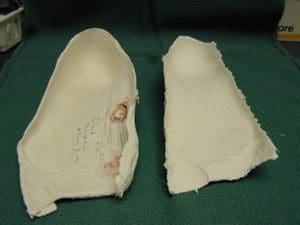
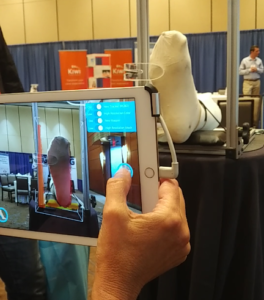
Anatomical Volumetric Foot Model (AVFM)
A physical or digital 3D model created directly from your foot. Examples include:
- Plaster of Paris casts
- Foam box impressions
- Laser 3D scans
- Stereo‑digital imaging
- Pin array systems
This is the gold standard for custom orthotics.
Extrapolated Volumetric Foot Model (EVFM)
A digital approximation created from pressure, temperature, or light data—not a true 3D cast. Examples include:
-
Pressure mapping systems
-
Photographs
-
Ink or carbon paper imprints
These do not use a physical 3D cast of your foot.
PFOLA Orthotic Device Definitions
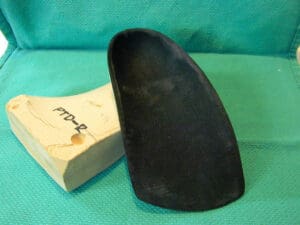
Anatomical Custom Foot Orthotic (ACFO)
A device made directly from an AVFM. The orthotic’s entire dorsal surface matches the corrected 3D model of your foot. This is a true custom orthotic.
Extrapolation System Foot Orthotic (ESFO)
Made from an EVFM. It may include corrections, but it will not match your arch contours as closely as an ACFO. Not ideal when precise contouring is required.
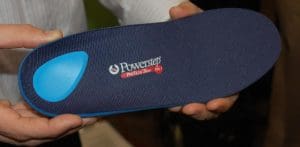
Library System Foot Orthotic (LSFO)
Made from pre‑manufactured shells or digital templates. Matched to your foot model but not built from it. Over‑the‑counter inserts fall into this category. Some clinicians use LSFO devices when a custom orthotic is not indicated.
How to Know What You’re Getting
You are receiving a true custom orthotic if:
-
A 3D cast or scan was taken
-
Your clinician performed a full biomechanical exam
-
Your gait was analyzed
-
Your prescription includes specific corrections or accommodations
-
The lab uses an AVFM to fabricate the device
If these steps were not part of your assessment, the device may not be custom.
Custom Orthotics at Whitby Family Footcare Clinic
Our orthotic prescriptions are based on:
-
Detailed biomechanical examination
-
Gait analysis
-
Symptom history
-
Activity demands
-
A 3D anatomical model of your foot
Your device is designed to improve efficiency, reduce pain, and support long‑term foot and lower‑leg function.
Book an Appointment
If you want to ensure you’re receiving a true custom‑made orthotic, we can help.