
Running & Walking Shoe Buying Checklist in Whitby
Choosing the right running or walking shoe can prevent injury, improve comfort, and support your foot health. This guide outlines what to look for when buying new footwear and how to ensure the best possible fit.
Buy Shoes at the Right Time of Day
Feet naturally swell throughout the day. Shop in the evening when your feet are at their largest to ensure a proper fit.
Understanding Shoe Widths & Sizing
Running shoes come in a wide range of widths:
| Width | Typical Fit |
|---|---|
| 2A | Narrow |
| B | Standard women’s width |
| D | Standard men’s width |
| 2E | Wide |
| 4E | Extra wide |
-
Women’s shoes tend to run narrower; men’s shoes tend to run wider.
-
Don’t worry if the best‑fitting shoe is technically a men’s or women’s model — the design is essentially the same.
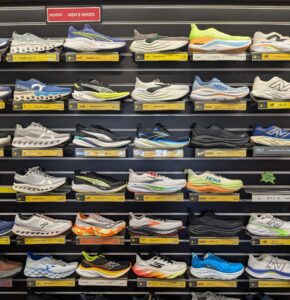
Get the Right Shoe Category for Your Feet
Your chiropodist may recommend one of the following shoe types based on your foot structure and gait:
- Minimalist cushioning
- Neutral cushioning
- Maximum cushioning
- Mild stability
- Moderate stability
- Motion control
We provide an updated list of recommended shoes in each category so you can try multiple brands and find the most comfortable option. If you need help determining your category, visit our page: How to Determine the Right Running Shoe for You.
How to Check Shoe Fit in the Store
1. Start With the Narrowest Width
Begin with the narrowest width available in your size (usually 2A).
- The heel should feel snug and secure.
- The forefoot should NOT feel tight or cause numbness. If the forefoot feels narrow, move up one width at a time — don’t skip sizes.
If the store doesn’t carry all widths, ask them to order the correct size or visit another retailer.
2. Wear the Socks You Plan to Use
Sock thickness affects fit. Bring the socks you normally wear for running or walking.
3. Don’t Adjust Shoe Size for Orthotics
Your orthotics will replace the removable insole that comes with the shoe. Do not size up to accommodate them.
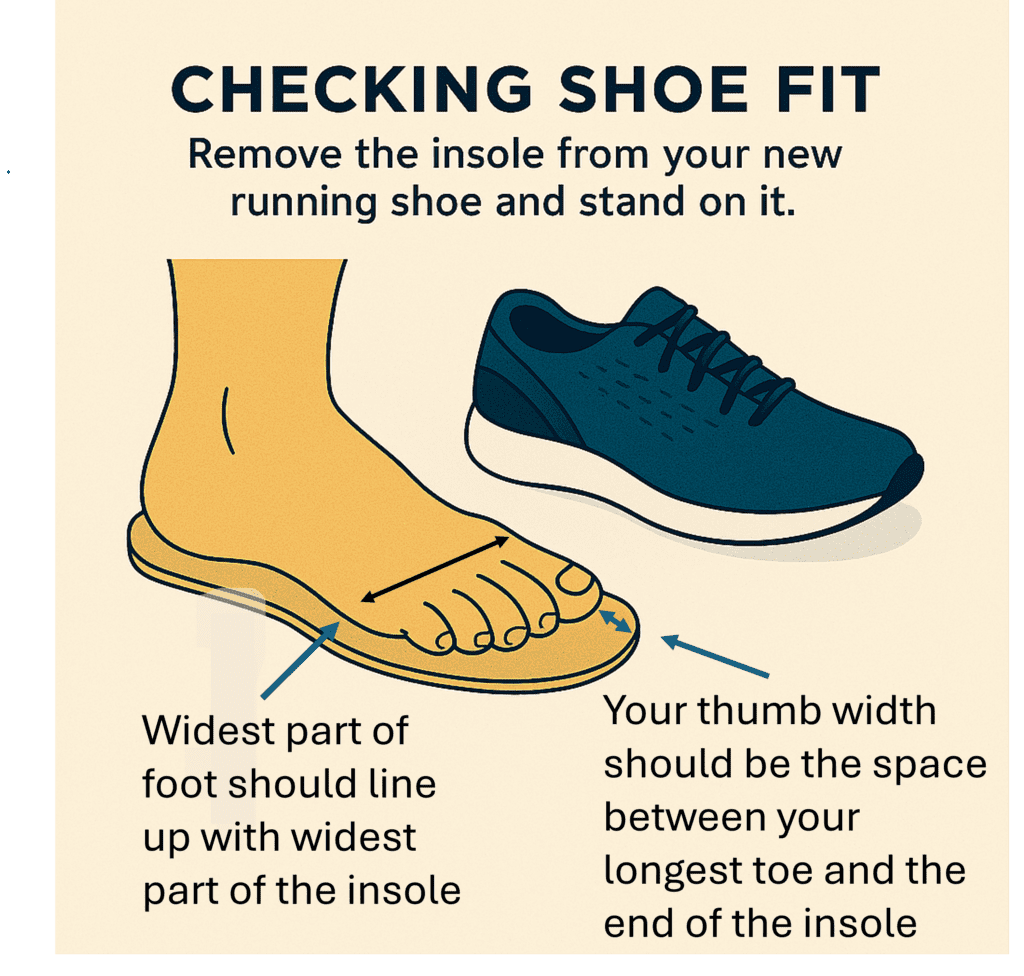
4. Use the Insole Test
Remove the insole and stand on it:
- There should be a thumb’s width between your longest toe and the end of the insole.
- The widest part of your foot should align with the widest part of the insole.
This is one of the most accurate ways to confirm proper length and width.
5. Check Heel Control
For maximum stability and motion control:
- The heel counter should feel snug
- But the forefoot should still feel comfortable
A shoe that is too wide may feel comfortable but can reduce the heel control you need.
After You Buy Your Shoes
-
Keep the receipt
-
Do not wear the shoes outdoors
-
Bring them to your chiropodist to confirm proper fit
This ensures you can still exchange or return them if needed.
Book an Appointment
If you need help selecting the right footwear or managing foot pain, we’re here to help.