
Foot and Lower Leg Anatomy
A clear understanding of how the foot and lower leg work helps explain many of the conditions we treat at Whitby Family Footcare Clinic. This overview connects the anatomy of the leg and foot to common sources of pain, mobility issues, and injuries.
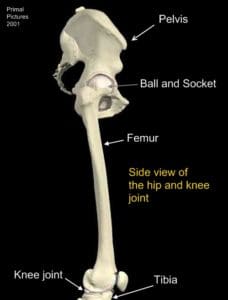
Upper Leg: The Femur and Its Joints
The upper portion of the leg contains a single long bone—the femur, or thigh bone. Its rounded head fits into the pelvis to form the hip joint, a ball‑and‑socket joint that allows multi‑directional movement. The lower end of the femur connects with the tibia to form the knee joint, a hinge joint responsible for bending and straightening the leg.
If you experience pain around the knee or difficulty with weight‑bearing, explore related issues on our Ilio tibial band friction syndrome or patella femoral pain syndrome pages.
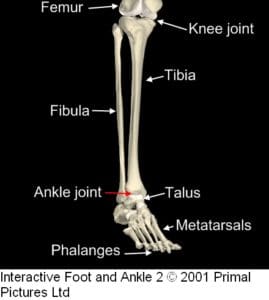
Lower Leg: Tibia and Fibula
The lower leg consists of two bones:
- Tibia — the shin bone and primary weight‑bearing bone
- Fibula — a thinner bone located on the outside of the tibia
Together, the tibia and fibula connect with the talus bone of the foot to form the ankle joint, which allows the foot to move up and down.
If you’re dealing with ankle instability or pain, visit our Ankle Pain & Sprains and Shin Splints page.
Foot Structure: Bones of the Foot
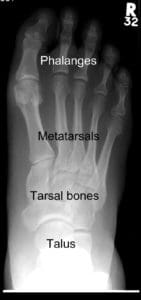
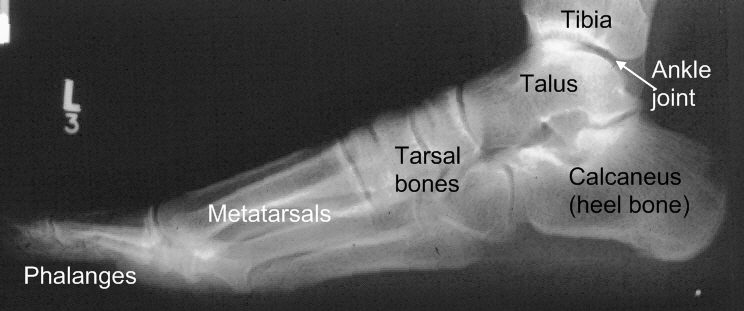
The foot is a complex structure made up of 26 bones, organized into three regions:
- Tarsal bones (7) — form the rearfoot and midfoot
- Metatarsal bones (5) — form the forefoot
- Phalanges (14) — the bones of the toes
These bones support standing, walking, running, and balance.
If you experience discomfort in the arch, ball of the foot, or toes, explore:
Ligaments, Joints, and Cartilage
The bones of the foot and lower leg are connected by a network of strong ligaments that stabilize the joints. Areas where bones meet are lined with smooth cartilage and coated with synovial fluid, allowing the joints to glide with minimal friction. These structures form numerous joints that collectively allow for complex movement and shock absorption.
Pain in these areas may relate to conditions such as arthritis which may benefit from Manual Foot Therapy
Related Conditions We Treat
Many common foot and ankle issues stem from the structures described above. Learn more about:
How We Help at Whitby Family Footcare Clinic
Our team provides evidence‑based assessment and treatment options for foot and lower‑leg conditions, including:
These services help reduce pain, improve mobility, and support long‑term foot health.
Serving Whitby and the Durham Region
We proudly support patients across Whitby, Brooklin, Oshawa, and the Durham Region. If you’re experiencing pain or difficulty with any of the structures described above, our clinicians can assess the underlying cause and recommend the most appropriate treatment options.
Next Steps
If something in this anatomy overview relates to the pain you’re experiencing, explore our condition pages or book an assessment to get clarity on what’s causing your symptoms.