
When to Replace Your Running or Walking Shoes: Footwear Guide for Whitby Runners & Walkers
Running and walking shoes lose their support long before they look worn. As cushioning breaks down and stability decreases, your feet and legs absorb more stress, increasing the risk of pain and injury. This guide explains how to check whether your shoes need replacing and how worn footwear affects your foot health. If you’re unsure, we offer footwear assessments at our Whitby clinic to help you choose the right support.
Signs Your Shoes Need to Be Replaced
If you run or walk regularly, your footwear is the most important part of your equipment. Using shoes past their lifespan increases the risk of injury, especially in the feet, ankles, and lower legs. Several visual and functional signs can help you determine when it’s time for a new pair.
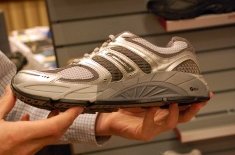
Visual Inspection Checklist
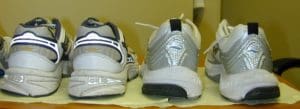
Heel Counter Alignment
Place your shoes on a flat surface and check whether the heel counter sits straight. If it tilts inward or outward, the material has fatigued and no longer provides proper rearfoot support. This often reflects your gait mechanics as well.
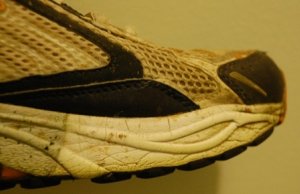
Midsole Creasing
Look for creases or compression lines along the midsole. These indicate breakdown of the cushioning material, reducing shock absorption and increasing stress on your feet.
Outsole Wear
Inspect the bottom of the shoe for worn‑down tread. Reduced traction affects stability and can alter your gait, contributing to overuse injuries.

How to Test Support & Stability
Heel Counter Test
If your shoes are showing signs of wear or you’re experiencing new foot or leg discomfort, a footwear assessment can help you choose the right support and prevent injury.
The heel counter stabilizes the rearfoot during walking and running. A supportive shoe should have a firm heel counter that resists pressure. To test it, hold the shoe in one hand and squeeze the heel with your thumb and fingers. If it collapses easily, the shoe no longer offers adequate support.
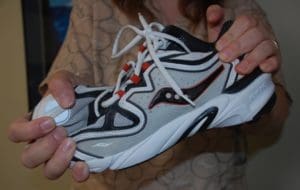
Torsional Stability Test
Torsional stability limits how much the shoe twists during movement. Hold the toe in one hand and the heel in the other, then twist. A good running or walking shoe should resist twisting. If it twists easily, the shoe has lost stability and may contribute to foot fatigue or injury.
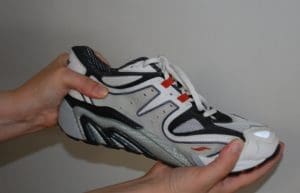
Bend Test
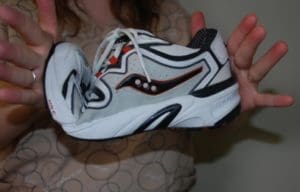
Hold the shoe at both ends and bend it. It should flex only at the ball of the foot—where your foot naturally bends. If it bends in the middle, the shoe no longer provides proper midfoot support.
Why Worn Shoes Increase Injury Risk
As shoes break down, they lose the ability to control motion, absorb shock, and support your foot’s natural mechanics. This can contribute to conditions such as:
-
Plantar fasciitis
-
Achilles tendon pain
-
Shin splints
-
Knee discomfort
-
Forefoot overload
Replacing shoes at the right time helps prevent these issues and supports healthier movement patterns.
How Often Should You Replace Your Shoes?
Most running and walking shoes last 500–800 km, depending on:
-
Your body weight
-
Your running/walking surface
-
Your gait mechanics
-
Shoe construction and materials
If you notice any of the signs above—even before reaching this mileage—it’s time to replace your shoes.
Footwear Assessment in Whitby
If you’re unsure whether your shoes are still supporting you properly, we offer footwear assessments, gait analysis, and orthotic consultations to help you choose the right shoe for your foot type and activity level.
Book an Appointment
Book an appointment If your shoes are showing signs of wear or you’re experiencing new foot or leg discomfort, a footwear assessment can help you choose the right support and prevent injury.