
Manual Foot Therapy in Whitby: Hands‑On Treatment for Pain, Stiffness & Mobility
Manual foot therapy is a hands‑on technique that restores joint mobility, reduces pain, and improves the way the foot functions during walking. After more than 18 years of using this method in clinical practice, the results remain consistently strong especially for patients with stiffness, osteoarthritis, neuroma‑related pain, and long‑standing mobility limitations. The approach was originally taught to the clinician by Dr. Rue Tikker, DPM, and continues to be a core part of treatment at Whitby Family Footcare Clinic.
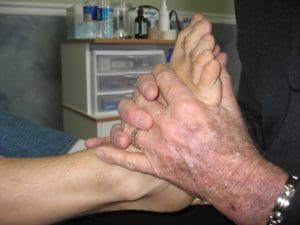
How Manual Foot Therapy Helps
Many people assume that foot comfort depends on having a “perfect” structure. In reality, most patients simply need adequate motion in a few key joints to walk comfortably. When joints stiffen, the foot compensates—leading to pain, fatigue, and altered gait patterns. Manual foot therapy helps by improving:
-
Joint mobility
-
Load distribution during walking
-
Muscle and ligament strain
-
Overall foot mechanics and efficiency
Patients often notice immediate improvements in comfort, balance, and walking ease after treatment.
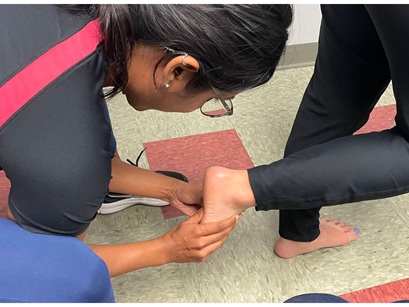
Conditions That Respond Well to Manual Foot Therapy
Manual foot therapy is especially effective for:
-
Stiff or painful osteoarthritic joints
-
Neuroma‑related discomfort
-
Midfoot stiffness that limits toe bending and push‑off
-
General foot fatigue from restricted joint motion
-
Compensatory gait patterns caused by long‑standing stiffness
By restoring mobility, the foot can move more naturally and efficiently.
Why Midfoot Mobility Is Essential
The midfoot plays a central role in how the front of the foot moves. When these joints stiffen, the toes cannot bend properly during walking, leading to:
- Pain under the ball of the foot
- Difficulty pushing off
- Increased strain on the plantar fascia
- Reduced walking efficiency
Releasing midfoot stiffness often produces immediate improvements in toe mobility and overall comfort.
How Manual Foot Therapy Fits Into Your Treatment Plan
Manual foot therapy can be used:
- As a standalone treatment
- In combination with custom orthotics
- Alongside stretching and strengthening exercises
- As part of a long‑term mobility and maintenance plan
Exercises that improve flexibility help maintain the benefits of joint mobilization.
A Long‑Established, Hands‑On Approach
Manual foot therapy helps reposition the bones of the feet and ankles, improve joint mechanics, and support healthy fluid movement through the lymphatic system. This reduces inflammation, supports healing, and enhances overall foot function. After nearly two decades of clinical use, it remains a powerful option for patients with stiffness, chronic pain, or mobility limitations.
Manual Foot Therapy in Whitby
We provide hands‑on treatment to restore mobility, reduce pain, and improve walking efficiency. Whether your discomfort is due to stiffness, arthritis, neuroma pain, or long‑standing gait changes, manual foot therapy can help restore natural movement.
Book an Appointment
If you’re experiencing foot stiffness or pain, manual foot therapy may help you move more comfortably.