
Toenail Fungus Treatment in Whitby
We provide effective toenail fungus treatment in Whitby, helping patients manage stubborn fungal infections with safe, evidence‑based therapies. Whether your infection is mild or severe, our chiropodists tailor treatment to restore nail health and prevent recurrence.
What Is Toenail Fungus?
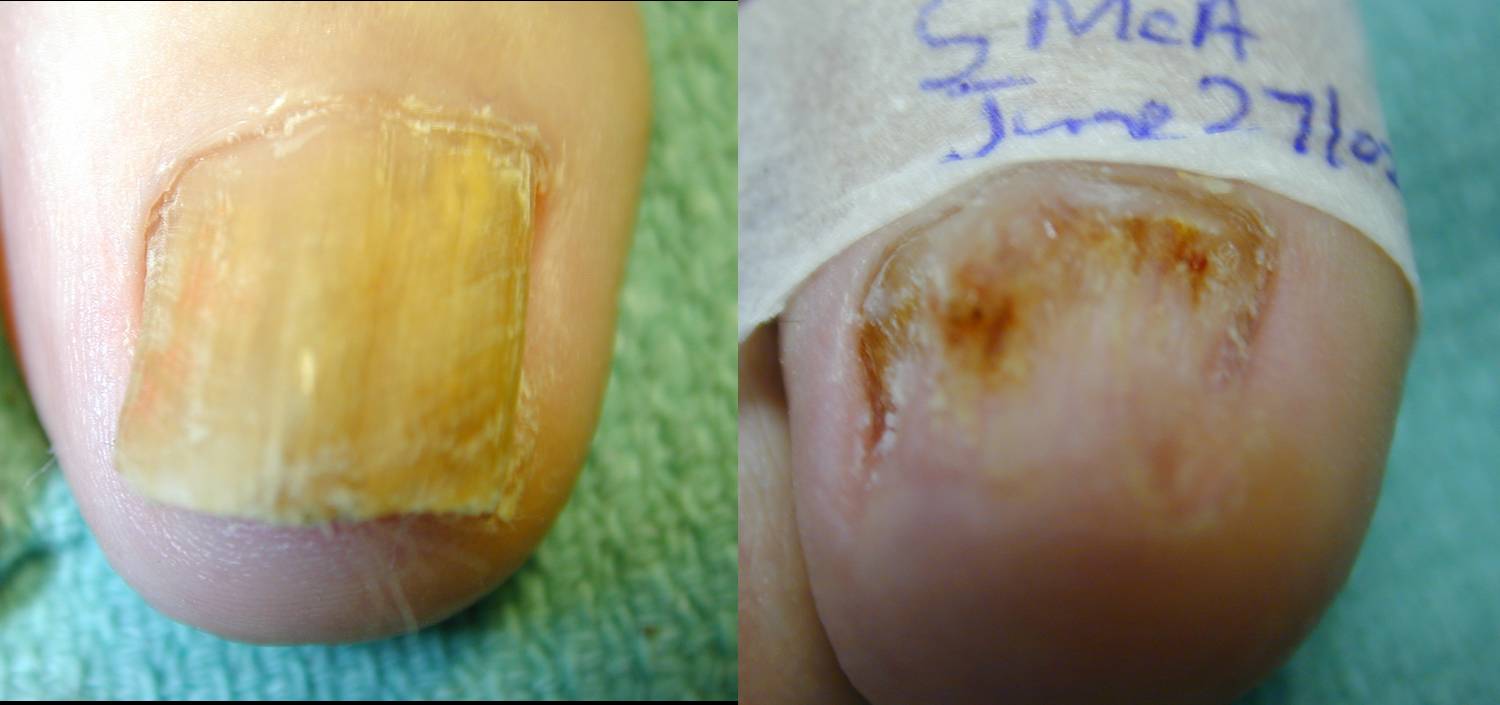
Toenail fungus (onychomycosis) is common, stubborn, and easy to overlook. Many people don’t realize they have it until the nail becomes thick, discoloured, or painful. At Whitby Family Footcare Clinic, we help you treat the infection and prevent it from coming back.
Toenail fungus is an infection of the nail plate and nail bed caused by dermatophytes ( fungi) that thrive in warm, dark, moist environments (like inside shoes). These organisms feed on keratin, the protein that makes up your nails.
The big toenail is the most commonly affected because it’s the one most likely to experience pressure, trauma, or irritation.
How Does Toenail Fungus Start?
Fungus typically enters the nail after trauma or irritation. Contributing factors include:
-
The way you walk or run (especially with flat feet or bunions)
-
Tight shoes or high heels
-
Steel‑toed work boots
-
A history of athlete’s foot
-
Sweaty feet or damp footwear environments
Once inside the nail, the fungus grows slowly, often for years, before symptoms become noticeable.
Who Is Most at Risk?
Toenail fungus affects 6% to 8% of the general population and up to 50% of people over the age of 70 in Canada but the real number may be higher because many people don’t seek treatment
You’re more likely to develop fungal nails if you:
- Are over age 65
- Have diabetes
- Have circulation problems
- Have a weakened immune system
- Have chronic athlete’s foot
For older adults, fungal nails often feel like a minor issue compared to other health concerns — but they can still cause pain, pressure, and difficulty walking.
How Severe Is Your Infection?
Fungal nails can be:
- Mild – small white/yellow spots
- Moderate – thicker nails, more discoloration
- Severe – infection reaches the nail matrix (the half‑moon area)
Severe infections are harder to treat and may require a combination of therapies.
Treatment Options We Offer
At Whitby Family Footcare Clinic, we tailor treatment to the severity of your infection. Options include:
- Thinning the nail plate to reduce pressure and improve comfort
- Removing diseased nail and fungal debris to expose healthy nail
- Topical antifungal medication to treat the nail and nail bed
- Laser therapy to target fungal organisms
- Oral antifungal medication (when appropriate)
- Most patients benefit from a combination of these treatments.
When Should You Book an Appointment?
You should schedule a visit if you notice:
- Thickened or crumbly nails
- Yellow, brown, or white discoloration
- A nail that lifts from the nail bed
- Pain when wearing shoes
- A history of athlete’s foot that keeps returning
A proper diagnosis is important — not all thick or discoloured nails are fungal. We’ll confirm the cause and guide you through the best treatment plan
Professional Toenail Fungus Treatment in Whitby
Our chiropodists provide safe, effective treatment for fungal toenails using a combination of mechanical care, topical therapy, laser treatment, and (when appropriate) oral medication. We help you manage the infection and prevent it from returning.
Book an Appointment
If you’re dealing with thick, discoloured, or painful toenails, our clinic offers trusted toenail fungus treatment in Whitby with personalized care and long‑term solutions.