
Toenail Fungus Treatment in Whitby
Fungal toenails (onychomycosis) are common, stubborn, and often worsen over time if left untreated. Our clinic provides safe, effective, and medically supervised treatment options to restore clearer, healthier nails and prevent the infection from returning.
What Is a Fungal Toenail Infection?
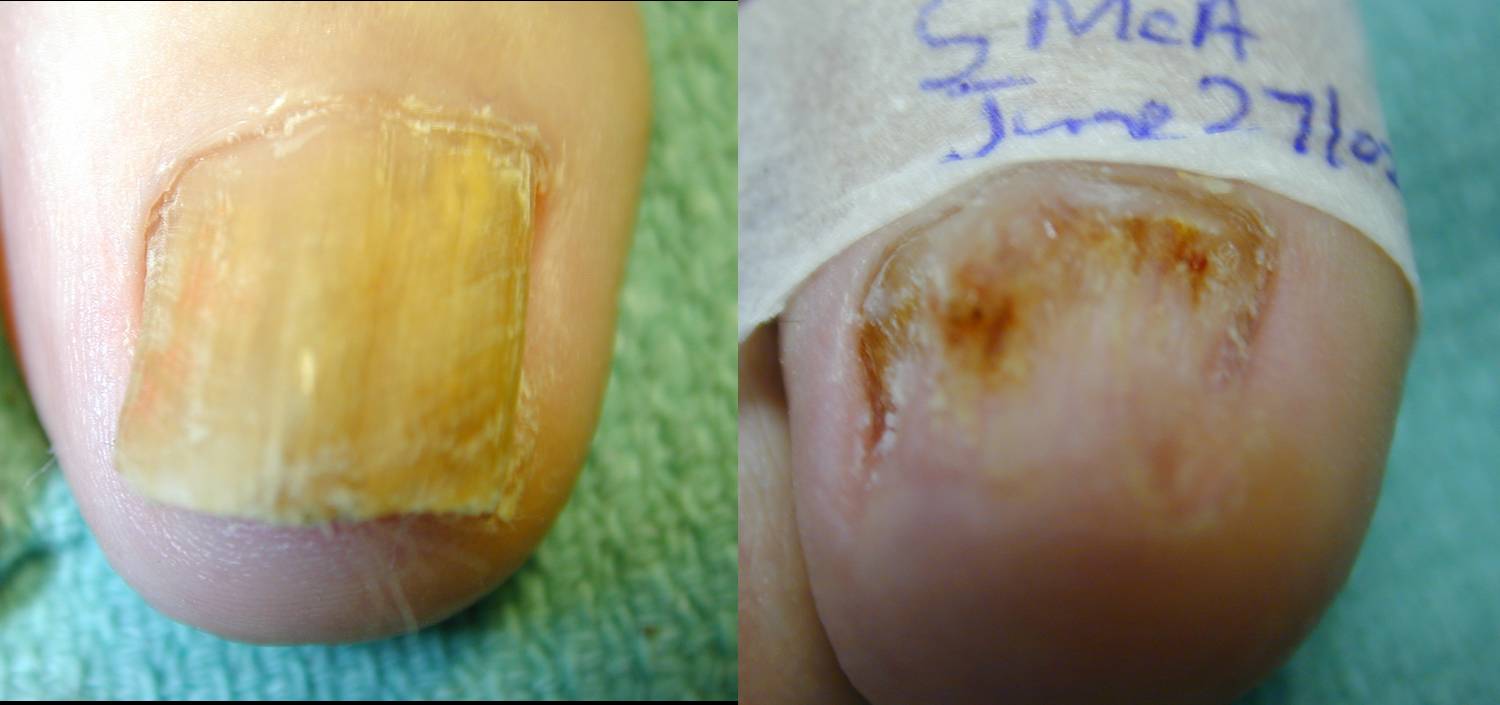
A fungal nail infection occurs when dermatophytes, yeast, or mold invade the nail plate or nail bed. This can cause the nail to become:
- Thickened
- Yellow or brown
- Brittle or crumbly
- Distorted in shape
- Difficult to trim
- Painful in shoes
Fungal nails rarely clear on their own — professional treatment is the most reliable way to eliminate the infection.
How Severe Is Your Infection?
Fungal nails can be:
- Mild – small white/yellow spots
- Moderate – thicker nails, more discoloration
- Severe – infection reaches the nail matrix (the half‑moon area)
Severe infections are harder to treat and may require a combination of therapies.
Why Fungal Nails Develop
You may be more likely to develop a fungal nail infection if you have:
- Athlete’s foot
- Excessive sweating
- Tight or non‑breathable footwear
- Nail trauma
- Diabetes or circulation issues
- A weakened immune system
- Frequent exposure to locker rooms or pools
Understanding the cause helps us choose the right treatment plan.
Who Is Most at Risk?
Toenail fungus affects 6% to 8% of the general population and up to 50% of people over the age of 70 in Canada but the real number may be higher because many people don’t seek treatment
You’re more likely to develop fungal nails if you:
- Are over age 65
- Have diabetes
- Have circulation problems
- Have a weakened immune system
- Have chronic athlete’s foot
For older adults, fungal nails often feel like a minor issue compared to other health concerns — but they can still cause pain, pressure, and difficulty walking.
How We Treat Fungal Nails
We offer a comprehensive, medically supervised approach to fungal nail treatment. Your plan may include:
1. Medical Nail Debridement
We safely reduce nail thickness and remove infected material to improve comfort and enhance the effectiveness of topical treatments.
2. Prescription‑Strength Topical Antifungals
We use clinically proven antifungal medications that penetrate the nail more effectively than over‑the‑counter products.
3. Oral Antifungal Medication (When Appropriate)
For more advanced infections, we may recommend oral medication in collaboration with your family physician.
4. Footwear & Hygiene Guidance
We help you prevent reinfection by addressing moisture, footwear, and environmental factors.
5. Ongoing Monitoring
Fungal nails improve slowly. Regular follow‑ups ensure the infection is clearing and your nail is growing back healthy.
How Long Does Treatment Take?
Fungal nails require patience. Even with effective treatment, it can take 6–12 months for a new, healthy nail to grow in. The earlier you begin treatment, the better your results.
Is It Contagious?
Yes — fungal infections can spread to:
-
Other toenails
-
Fingernails
-
Family members
-
Shared surfaces (showers, floors, footwear)
Early treatment helps prevent spreading and long‑term nail damage.
When to Seek Treatment
Book an appointment if you notice:
- Thick, yellow, or crumbling nails
- A nail that is lifting from the nail bed
- Pain or pressure in shoes
- A nail that is changing shape or colour
- A persistent case of athlete’s foot
Fungal nails do not resolve on their own — professional care is the most effective option.
Insurance Coverage
Many extended health plans cover chiropody/footcare services. We provide detailed documentation to support your claim.
Book Your Fungal Nail Treatment in Whitby
If you’re dealing with thick, discoloured, or painful toenails, we can help. Our treatments are safe, effective, and tailored to your needs.
Book your appointment today.