
Fungal Toenail Treatment Options in Whitby
What Is a Fungal Toenail?
A fungal toenail (onychomycosis) is an infection that develops when fungus enters the nail through small cracks or lifting at the nail edge. Over time, the nail becomes thick, discoloured, brittle, and difficult to trim. Without treatment, the infection can spread to other nails or surrounding skin.
Common Symptoms
-
Yellow, brown, or white discolouration
-
Thickened or crumbly nails
-
Nail lifting from the nail bed
-
Changes in nail shape
-
Mild odour
-
Discomfort when wearing shoes
If you’re noticing these changes, early treatment makes a big difference.
What Causes Fungal Toenails?
Fungal infections thrive in warm, moist environments. Common causes include:
- Walking barefoot in public pools, gyms, or locker rooms
- Excessive sweating
- Nail trauma
- Wearing tight or non‑breathable footwear
- Athlete’s foot spreading to the toenails
- Reduced circulation or weakened immune system
Treatment Options at Whitby Family Footcare
1. Do Nothing
f your fungal nails don’t bother you, treatment isn’t required.
The infection may stay the same or slowly worsen over time.
Not recommended for most patients.
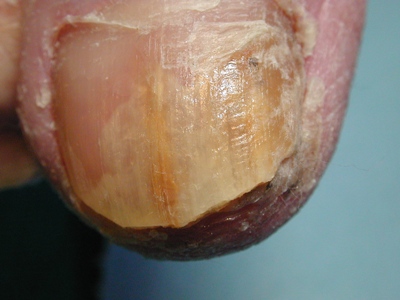
2. Professional Nail Thickness Reduction (Debridement)
If your nails are thick, painful, or hard to trim, regular reduction every 8–10 weeks can:
- Reduce pressure in shoes
- Improve comfort
- Make nails easier to manage at home
This does not cure fungus but improves comfort..
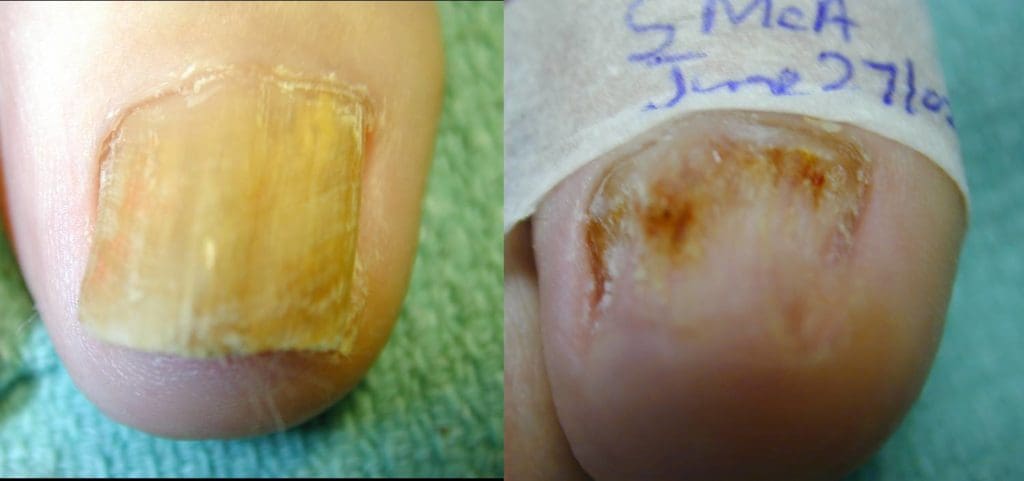
3. Topical Antifungal + Nail Reduction
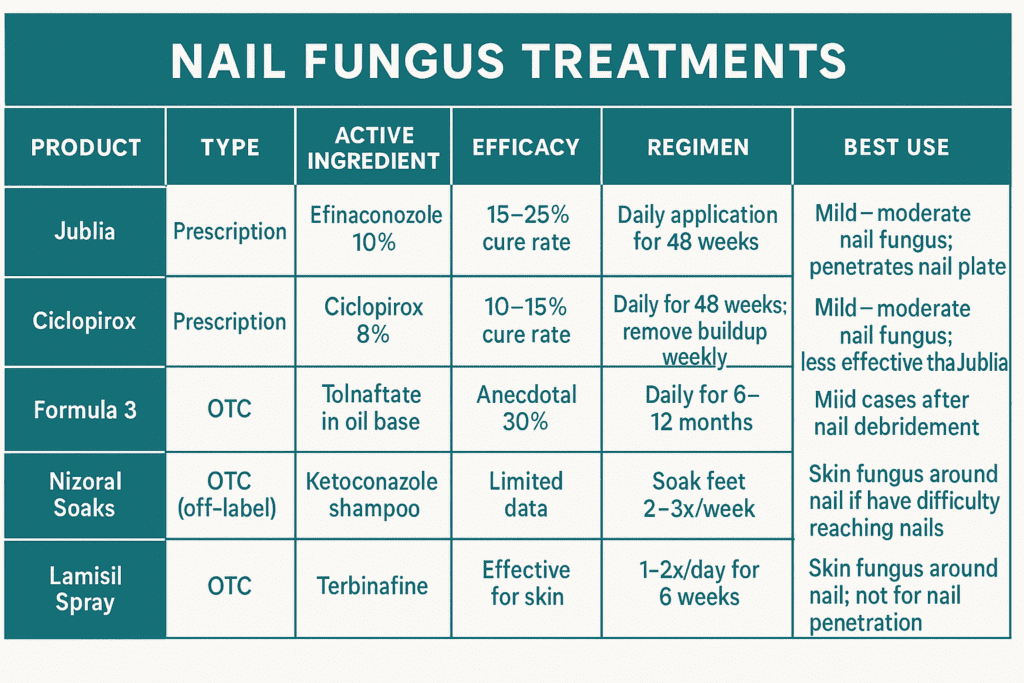
Topicals must be used once or twice daily for up to 12 months. Options include:
- OTC antifungals (Lamisil™ spray for skin fungus around the nail)
- Prescription topicals (Jublia™, Ciclopirox™)
- Formula 3™ (your preferred OTC option)
- Nizoral™ foot soaks for patients who cannot reach their feet
Best for mild to moderate infections. Success rate: ~30% with consistent use.
4. Oral Medication + Topical Treatment + Nail Reduction
Oral terbinafine (Lamisil™) is considered the most effective medical treatment, with improvement rates around 75%.
Important notes:
- Taken once daily for 90 days
- Requires liver function and blood tests before and during treatment
- We only prescribe it after lab confirmation of fungus
- Generic versions are available
This option is best for patients who want the highest chance of clearing the infection and are comfortable with medical monitoring.
5. Laser Therapy + Topical Treatment + Nail Reduction
Laser therapy uses light energy to target fungus in the nail without damaging the surrounding skin.
Benefits:
- No injections
- No pills
- No lab tests
- No downtime
Reported effectiveness is around 60-75%, especially when combined with regular nail care and topical treatment. Results vary depending on nail damage, circulation, and how long the infection has been present.
6. Preventive Care & Home Management
To prevent reinfection, we may recommend:
- Antifungal shoe spray or UV sterilizers
- Medicated foot powders
- Proper nail trimming techniques
- Wearing breathable socks and footwear
- Treating athlete’s foot promptly
How Long Does Treatment Take?
Fungal toenails take time to clear because the nail must grow out fully. On average:
-
Fingernails: 4–6 months
-
Toenails: 9–12+ months
Visible improvement usually begins within a few months when treatment is consistent.
When to See a Chiropodist
Book an appointment if you notice:
-
Persistent nail discolouration
-
Thick, painful, or hard‑to‑trim nails
-
Spreading infection
-
Recurring athlete’s foot
-
Diabetes or circulation issues
Early care leads to better outcomes.
Fungal Toenail Treatment in Whitby
At Whitby Family Footcare Clinic, our chiropodists provide safe, effective, and personalized treatment options for fungal toenails. Whether your infection is mild or advanced, we’ll help you choose the best approach for your lifestyle and nail health.
Book an Appointment
Ready to treat your fungal toenails? Our Whitby clinic is accepting new patients.